About The Song
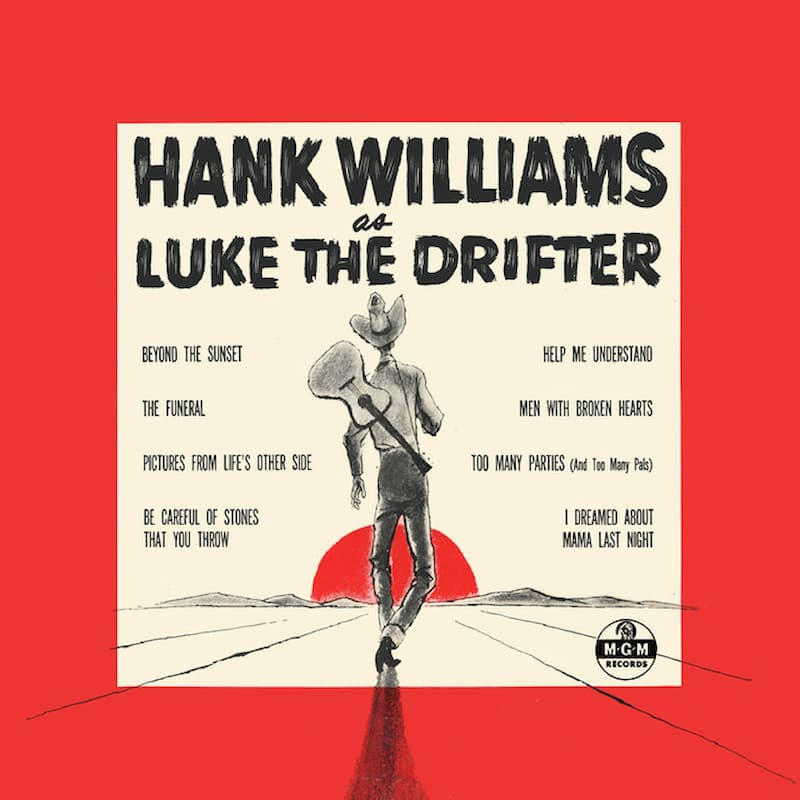
“Be Careful of Stones That You Throw” was issued by Hank Williams under his Luke the Drifter persona in 1952. The moralizing recitation was released by MGM (catalog number often listed as 11309) after a July 11, 1952, session at Castle Studio in Nashville, and it joined a string of spoken-word pieces Williams used to explore parable-like themes distinct from his honky-tonk singles.
The song was written by Bonnie Dodd, a steel-guitar player and songwriter whose material circulated in country circles in the 1940s and 1950s. Although Little Jimmy Dickens recorded an early version in 1949, Williams’s Luke the Drifter reading—the character name under which he issued sermons, recitations and moral tales—brought the story to a wider audience in the early 1950s.
Structurally the piece is a short, narrative caution: a woman who has been shunned by neighbors performs a heroic act—saving a child from a rushing car—and is killed in the process, the same child belonging to one of her earlier critics. The narrator’s closing plea, that listeners be careful before they judge others, is rendered in a plain, conversational delivery rather than in full sung melodrama, a hallmark of the Luke the Drifter material.
Session credit listings associate Jerry Rivers (fiddle), Don Helms (steel guitar) and Harold Bradley (rhythm guitar) with the recording; some discographies also suggest Chet Atkins on lead guitar and Ernie Newton on bass. Fred Rose produced the session, fitting the record into the small body of spoken-word releases that Rose and Williams shaped as complements to Hank’s more commercially driven singles.
The record did not function as a headline chart hit in the way Hank’s A-side honky-tonk singles did; Luke the Drifter releases were aimed at a different audience and often traded immediate chart success for reputation and thematic range. Nonetheless, Williams’s version became one of the better-known treatments of the song and helped ensure it was picked up later by artists from country and soul traditions alike.
Over time the composition has enjoyed a varied cover life: Dion recorded it in the 1960s, The Staple Singers included it on an album, Bob Dylan and The Band recorded a Basement Tapes version, and Hank Williams Jr. issued a rendition in the late 1960s. Those interpretations show how a short, cautionary recitation could travel between genres and decades, leaning on the song’s simple moral and dramatic narrative.
Video
Lyric
A tongue can accuse and carry bad news the seeds of distrust it will sow
But unless you’ve made no mistakes in your life be careful of stones that you throw
A neighbor was passing my garden one time she stopped and I knew right away
That it was gossip not flowers she had on her mind
And this is what I heard my neighbor say
That bad girl down the street should be run from our midst
She drinks and she talks quite a lot
She knows not to speak to me or my child my neighbor then smiled and I thought
A tongue can accuse
A car speeded by and the screaming of brakes a sound that made my blood chill
For my neighbor’s one child had been pulled from the path
And saved by a girl lying still
The child was unhurt and my neighbor cried out oh who was that brave girl so sweet
I covered the crushed broken body and sad the bad girl who lived down the street
A tongue can accuse