About The Song
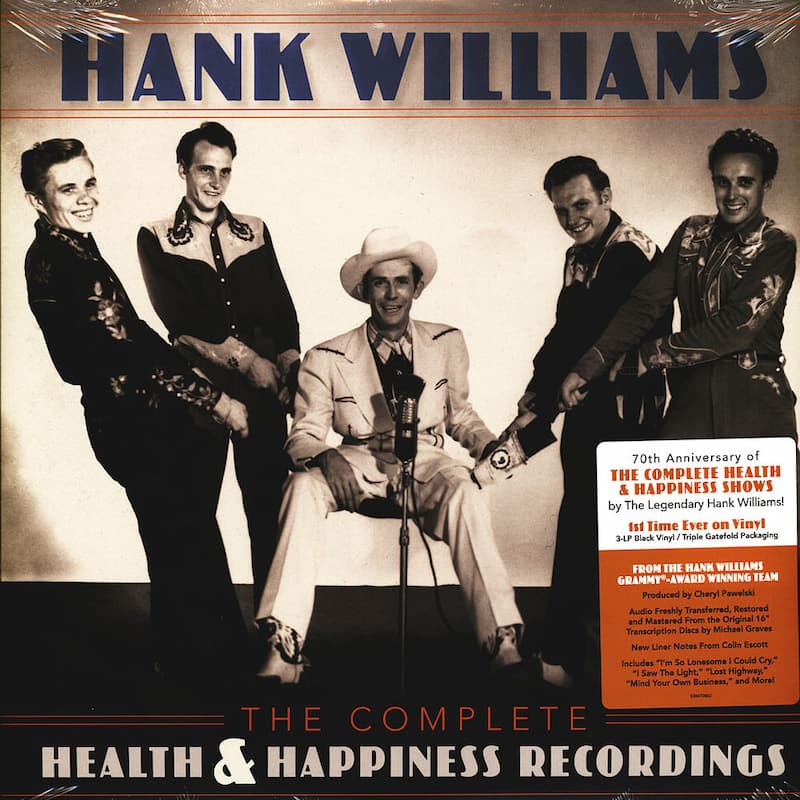
“A Tramp on the Street” is one of the rarer Hank Williams performances preserved outside his commercial MGM sessions: the recording most listeners know comes from the Health & Happiness radio transcriptions Hank and his Drifting Cowboys cut at WSM in October 1949. Those short programs — recorded direct to acetate for later syndication — captured Hank in a spare, live-in-studio setting and included a handful of sacred or “heart” songs alongside his better-known honky-tonk numbers.
The song itself was written and adapted by the husband-and-wife team Grady and Hazel Cole, who popularized the tune in the 1930s and 1940s; their version reworked older material often traced back to an 1877 poem about Lazarus, which helps explain the song’s plain, parable-like language. Hank knew the piece well enough to place it in his self-published songbook earlier in his career, and his Health & Happiness reading is the only known commercial-quality recording of him performing it.
Hank’s treatment on the broadcast is a short, earnest narrative rather than a showpiece: he frames the story in Christian terms, recounting how a poor man is left to die while the comfortable look away, then asks listeners to consider whether they would open their doors to the needy. That moral axis is why the tune often appears in collections of country gospel and has been taken up by folk and gospel artists in later decades.
The Health & Happiness shows were sponsored by Hadacol and produced as eight roughly 12-minute transcriptions; engineers recorded the programs at WSM and then pressed 16-inch transcription discs for distribution to radio stations. Archivists and reissue producers have noted that several of the 1949 transcriptions sound remarkably immediate, and modern transfers of the acetates have made these versions widely available for the first time in decades.
Because it was a radio-show performance and not released as an MGM single, “A Tramp on the Street” did not chart in the way Hank’s commercial singles did, but it gained afterlife through compilations and covers. Joan Baez, Peter, Paul & Mary, the Staple Singers and numerous country artists recorded the song in the 1960s and 1970s, which helped cement it as a cross-genre moral ballad rather than a strictly regional hymn.
Today the track is most often encountered on Health & Happiness compilations and the various “complete transcriptions” reissues that BMG and specialty labels have released; for listeners interested in Hank’s radio work, it’s a revealing example of how he balanced popular hits with short, sermon-like performances that exposed another side of his repertoire.
Video
Lyric
Only a tramp was Lazarus sad fate
He who lay down at the rich man’s gate
He begged for the crumbs from the rich man to eat
He was only a tramp found dead on the street
He was some mother’s darlin’, he was some mother’s son
Once he was fair and once he was young
And some mother rocked him, her darlin’ to sleep
But they left him to die like a tramp on the street
Jesus, he died on Calvary’s tree
He shed his life’s blood for you and for me
They pierced his side and then his feet
And they left him to die like a tramp on the street
He was Mary’s own darlin’, he was god’s chosen son
Once he was fair and once he was young
Mary, she rocked him, her darlin’ to sleep
But they left him to die like a tramp on the street
If Jesus should come and knock on your door
For a place to come in, or bread from your store
Would you welcome him in, or turn him away
Then the god’s would deny you on the great judgment day