About The Song
“Heartbreak U.S.A.” was written by Harlan Howard and recorded by Kitty Wells in 1960 for Decca Records. The session for the title track took place on July 13 at Bradley Film and Recording Studio in Nashville under producer Owen Bradley. Released as a single in April 1961, with “There Must Be Another Way to Live” on the B-side, it became one of Wells’ most successful records of the decade. The single reached number one on the Billboard Hot C&W Sides chart, held the top position for four weeks, and remained on the chart for a total of twenty-three weeks. It stands as her third and final number-one country single.
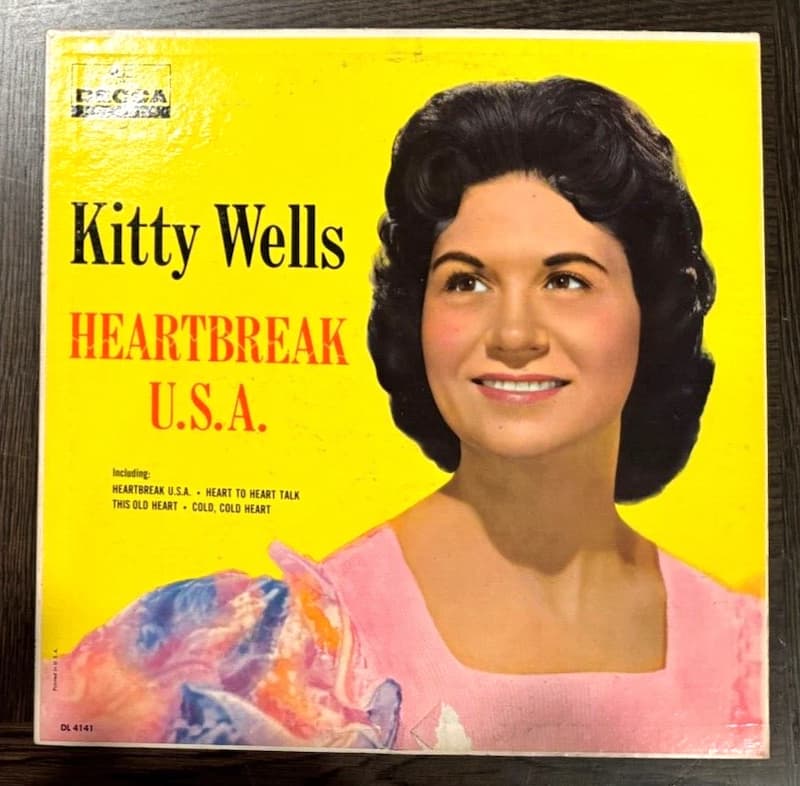
The song later served as the title track for Wells’ 1961 album of the same name, issued on Decca. That collection gathered a series of heartache-themed numbers, including covers of “Heartaches by the Number,” “Cold, Cold Heart,” and “I’ve Got a New Heartache,” along with other tracks that kept the focus tightly on emotional loss. Backing vocals by the Jordanaires can be heard on the hit single, reflecting the polished Nashville Sound approach Bradley favored at the time.
Howard’s lyric places the narrator in a lonely harbor setting, waiting for a departed lover whose absence is framed by distant places and foreign temptations. She asks him not to let “Geisha girls” or a “sweet Fraulein” turn his head and reminds him to write letters addressed to “Heartbreak U.S.A.” The imagery of trade winds and empty docks suggests a man away on travel or military duty, a common thread in country songs of the early 1960s that Wells delivered in her characteristically steady, unadorned style.
By 1961 Wells had already established herself as the leading female country artist of the previous decade. Her 1952 breakthrough “It Wasn’t God Who Made Honky Tonk Angels” had opened the door for women on the charts, and she continued to place singles regularly through the 1950s. “Heartbreak U.S.A.” arrived as she entered a new phase of her career, still working with Bradley and still drawing strong radio play at a time when the country landscape was beginning to shift toward smoother production values.
The single’s B-side also found an audience, reaching number twenty on the country chart. Covers appeared soon after: Jeanne Black released a version in late 1961 that did not chart, and Dottie West recorded the song in 1964. Howard, already known for other hits of the period, had supplied Wells with a piece that fit her established persona of quiet resilience in the face of romantic disappointment. The record marked a commercial high point that closed her run of number-one singles while confirming her continued presence near the top of the country rankings into the early 1960s.
Video
Lyric
The harbor’s empty, my love has gone
With aching heart I face each cold and lonely dawn
And till the trade winds bring him home to stay
I’ll live in heartbreak USADon’t let those Geisha girls get your heart in a whirl
And if you meet some sweet Fraulein remember you’re mine
Don’t forget your sweetheart while you’re away
Back home in heartbreak USASometimes I’m lonely and time stands still
And I wonder if you feel the way I always will
So darling write me letters every day
In care of heartbreak USADon’t let those Geisha girls…