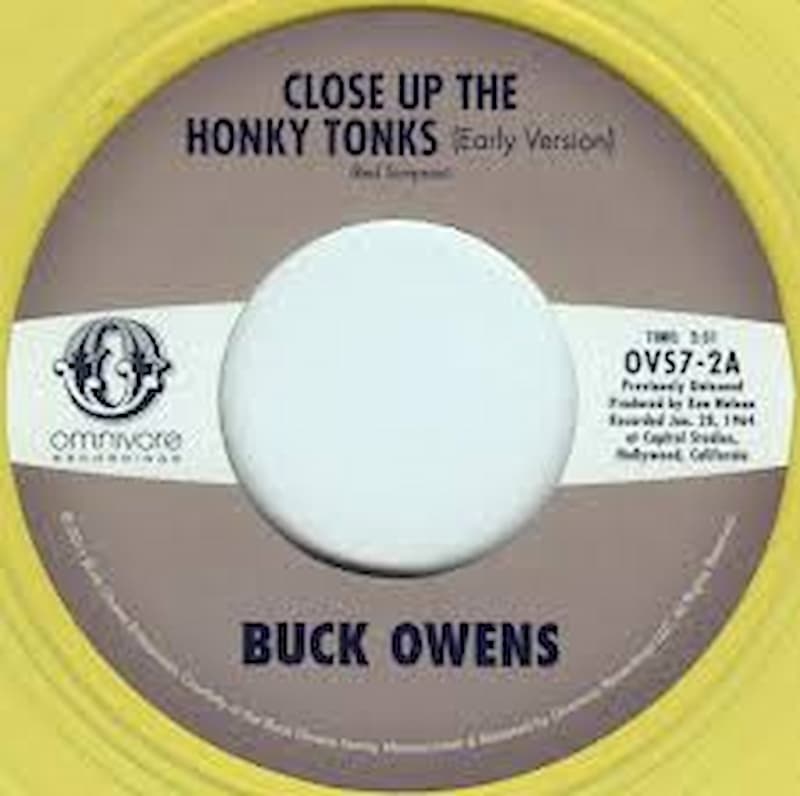
About The Song
“Close Up the Honky Tonks” occupies a special place in Buck Owens’s world because it reflects the environment that shaped him as much as it reflects the emotions he sang about. By the mid-1960s, Owens was already a major figure in country music, yet he never lost his connection to the late-night bars and dance halls where his sound had been forged. The song feels like it comes from the end of a long night, when the excitement has drained away and only truth is left standing.
People close to Buck Owens often said he understood honky-tonks better than almost anyone because he had lived in them before he ever headlined them. Long before television appearances and chart dominance, Owens played small clubs where the lights stayed on until morning and the same faces showed up night after night. Those rooms taught him that heartbreak rarely looks dramatic. More often, it shows up as exhaustion, as the quiet moment when the band packs up and the bartender starts wiping down the counter.
Stories from the Bakersfield era describe Buck lingering in clubs even after his own sets were finished, listening to other musicians or simply watching the crowd thin out. He noticed who stayed until the end and who left early, who drank to forget and who drank because they had nowhere else to go. “Close Up the Honky Tonks” sounds like it was written from one of those observations, when the night has run its course and the music can no longer distract from what’s missing.
Unlike many breakup songs of the era, this one does not center on confrontation or regret. There is no argument, no final plea. Instead, it captures the moment when the narrator accepts that staying longer will not change the outcome. Buck Owens had a practical streak, both in life and in music. Friends and bandmates recalled that he believed knowing when to walk away was a kind of wisdom. That belief quietly shapes the song’s tone, which feels resolved rather than wounded.
During recording sessions, Owens often pushed for takes that felt honest rather than dramatic. He trusted simplicity and timing more than grand gestures. That approach carried into songs like this, which were meant to feel natural, almost casual, as if the singer were stating a fact rather than asking for sympathy. It is easy to imagine Buck viewing “Close Up the Honky Tonks” as a song that should sound like it could happen to anyone, because he had seen it happen so many times.
The song also resonated strongly with audiences because honky-tonks were still central to working-class nightlife. Many listeners recognized themselves in the image of a place shutting down, of music ending before the heart is ready. When Owens performed the song, the reaction was often quiet rather than explosive. Band members later recalled moments when the room seemed to hold its breath, as if people were thinking about their own long nights and unfinished feelings.
Over time, “Close Up the Honky Tonks” has endured not because it was loud or flashy, but because it feels honest. It captures Buck Owens at his most observant, turning a familiar setting into a moment of emotional clarity. The song reminds listeners that sometimes the hardest part of heartbreak is knowing the night is over, and having the strength to ask for the lights to be turned off.
Video
Lyric
She’s in some honky-tonk tonight, I know
She’s dancing where the music’s loud and lights are low
In a crowded bar she likes to hang around
And as long as there’s a honky-tonk she’ll never settle down
So, close up the honky-tonks, lock all the doors
Don’t let the one I love go there anymore
Close up the honky-tonks, throw away the key
Then maybe the one I love will come back to me
I wish I had the power to turn back the time
And live again the hours when she was all mine
But it hurts to see her running with that crowd downtown
And as long as there’s a honky-tonk, she’ll never settle down
So, close up the honky-tonks, lock all the doors
Don’t let the one I love go there anymore
Close up the honky-tonks, throw away the key
Then maybe the one I love will come back to me