About The Song
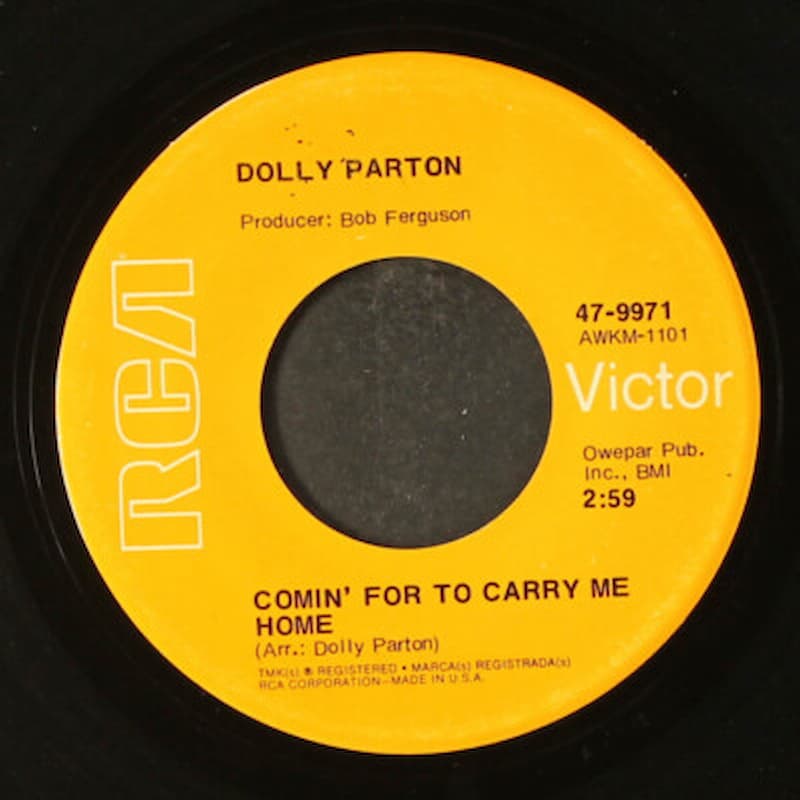
Dolly Parton released her version of the traditional African American spiritual in 1971 under the title “Comin’ for to Carry Me Home.” The song is her adaptation of “Swing Low, Sweet Chariot,” a piece long associated with hope and deliverance. Parton arranged the track herself and issued it as a single on RCA Victor that year, with the title track from her gospel album serving as the B-side. Although she had recorded the album’s core sessions in May 1970, this particular cut was laid down on January 25, 1971, and positioned as an advance release tied to her growing interest in sacred music.
The single did not appear on the original track listing of Parton’s sixth solo studio album, The Golden Streets of Glory, which arrived on February 15, 1971. That record featured a mix of gospel standards such as “How Great Thou Art” and “Wings of a Dove” alongside originals written by Parton and members of her family. Produced by Bob Ferguson at RCA Studio B in Nashville, the album reflected the close overlap between country and sacred music that defined much of her early solo work. It reached number 22 on the Billboard Top Country Albums chart and earned a nomination for Best Sacred Performance at the 1972 Grammy Awards.
“Comin’ for to Carry Me Home” climbed to number 23 on the Billboard Hot Country Songs chart. The recording highlighted Parton’s clear, soaring vocals set against understated acoustic guitar and gospel-tinged backing. It stood apart from her more commercially driven country singles of the period, offering instead a straightforward expression of faith rooted in the spiritual traditions she had known since childhood in the churches of east Tennessee.
The original spiritual dates back to the era of slavery in the American South, though its precise authorship remains unclear. One longstanding account links its inspiration to Sarah Hannah Sheppard, an enslaved woman in Tennessee who, facing the threat of separation from her infant daughter, was reportedly counseled by an elder to await divine deliverance. Another version credits Wallace Willis, a formerly enslaved man working in the Choctaw Nation in Oklahoma, whose songs were later shared with the Fisk Jubilee Singers. The group popularized the piece in the 1870s, helping spread it beyond the South. Many historians note that spirituals like this one carried layered meanings for those who sang them, serving as both prayers for heaven and subtle signals related to the Underground Railroad and the search for freedom in the North.
For Parton, the song fit naturally into her catalog at a time when she was exploring the sacred music that shaped her upbringing. Her maternal grandfather, Rev. Jake Owens, even wrote the liner notes for the accompanying album, emphasizing the personal and familial ties to religious expression. By 1971 she had already enjoyed solo success with tracks like “Joshua” and continued her duet work with Porter Wagoner, yet she made room for these faith-based recordings amid her rising country career. The choice to adapt such a well-known spiritual underscored her respect for the genre’s history while adding her distinctive country inflection.
Although the single was not included on the original 1971 album, Parton’s recording later found a wider audience through reissues. It appeared as a bonus track on the 2010 compilation Letter to Heaven: Songs of Faith & Inspiration, allowing newer listeners to discover her take on the classic. The song remains one of the quieter entries in her extensive discography, illustrating how traditional spirituals have continued to connect across decades through artists who draw directly from their cultural and personal roots.
Video
Lyric
Comin’ For To Carry Me Home
I looked over jordan and what did I see
Coming for to carry me home
I saw a whole band of angels coming after me
Coming for to carry me homeSwing low sweet chariot
Coming for to carry me home
Swing low sweet chariot
Coming for to carry me homeWell I’m sometimes up and sometimes I’m down
Coming for to carry me home
But still my soul is heavenly bound
Coming for to carry me homeWell if you get there before I do
Coming for to carry me home
I want you to tell all my friends I’m a coming too
Coming for to carry me homeOh swing down chariot stop and let me ride
Swing down chariot stop and let me ride
Swing down sweet chariot stop and let me ride
Cause I’ve earned me a home on the other side
Coming for to carry me home