About The Song
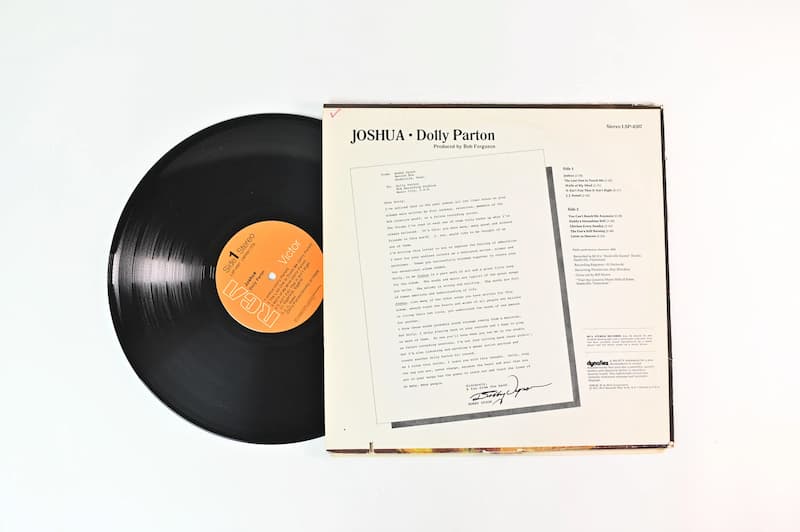
Released on November 9, 1970, as the lead single and title track from her seventh solo studio album, “Joshua” gave Dolly Parton her first number-one hit on the Billboard Hot Country Songs chart. The album arrived on April 12, 1971, through RCA Victor and was produced by Bob Ferguson at RCA Studio B in Nashville. Recorded on October 21, 1970, the three-minute-five-second track featured “I’m Doing This For Your Sake” on the B-side and arrived at a time when Parton was balancing her growing solo work with high-profile duet recordings alongside Porter Wagoner.
By the early 1970s Parton had already built a reputation as a gifted songwriter and performer with several charting singles, yet solo breakthroughs remained elusive. The song drew directly from the Appalachian world of her East Tennessee childhood, where she encountered reclusive mountain men who lived alone in remote cabins. Parton later explained in her 2020 book Songteller that she based the central character on two or three such figures she knew as a girl, shaping the narrative around their isolated lives and quiet dignity.
The recording captured Parton’s distinctive vocal style, complete with yodeling flourishes that added a playful yet heartfelt touch. Ferguson’s production kept the arrangement spare and acoustic-driven, allowing the storytelling to take center stage without heavy orchestration. This approach aligned with the traditional country sound Parton favored even as Nashville experimented with more crossover elements.
The single climbed steadily after its debut at number 57 on the Billboard Hot Country Songs chart in December 1970. It reached the top spot on February 6, 1971, for one week and finished the year at number 25 on the country year-end tally. It also peaked at number 2 on the Canadian RPM Country Tracks survey and number 8 on the Billboard Bubbling Under Hot 100. The success earned Parton her first Grammy nomination in the Best Country Female Vocal Performance category, though she lost to Lynn Anderson.
In the lyrics a curious young woman makes her way to a rundown shack beside the railroad tracks, drawn by rumors of a mean and vicious man named Joshua. What she finds is a lonely recluse with a kind heart rather than the feared figure of local gossip. The narrator shares her own fabricated tale of orphanage life to connect with his isolation, and the two ultimately choose to make the little shack their home together. The simple tale unfolded like an Appalachian fairy tale, blending curiosity, misunderstanding, and quiet romance.
The release marked a turning point that helped solidify Parton’s identity as a solo artist capable of delivering authentic mountain stories to a wider audience. It stood alongside other early hits that drew from her roots, setting the stage for later classics such as “Coat of Many Colors” and “Jolene.” Even decades afterward Parton continued to speak fondly of the track’s narrative and its understated musical charm, viewing it as an early example of the honest character-driven songs that defined much of her catalog.
Over time “Joshua” remained a reminder of how Parton’s childhood observations could translate into universal country narratives. The song’s gentle resolution and warm delivery captured the same unpretentious spirit that would carry her through five more decades of music, bridging her mountain heritage with the broader country audience she helped expand.
Video
Lyric
Well a good way down the rail-road track
There was this little old run down shack
And in it lived a man I’d never seen…
Folk said he was a mean and a vicious man
And you’d better not set foot on his land
But I didn’t think nobody could be that mean
So I took me out walking down the rail-road track
I was gonna go down to that little old shack
And just find out if all them things I’d heard was true
There was a big black dog laying out in the yard
And it growled at me and I swallowed hard
And I heard somebody say, “Well, who are you?”
Oh, and there he stood in the door of that shack
And his beard and his hair was long and black
And he was the biggest man I ever seen
When he spoke his voice was low and deep
But he just didn’t frighten me
‘Cause somehow I just knew he wasn’t mean
He said, “What you doing snooping round my place”
And I saw a smile come across his face
So, I smiled back and I told him who I was
He said “Come on in, pull you up a chair
You might as well since you’re already here”
And he said, “You can call me, Joshua”
Joshua, Joshua, what you doing living here all alone?
Joshua, Joshua, ain’t you got nobody to call your own?
No, no, no, no
We talked ’til the sun was clean out of sight
And we still talkin’ when it come daylight
There was just so much we had to say
I spent my life in an orphans home
And just like him, I was all alone
So I said, “Yeah”, when he asked if I’d stay
Oh, we grew close as time went on
And that little ole shack it was a happy home
And we just couldn’t help but fall in love
That big black dog and that little ole shack
Sitting down by the railroad track
It’s plenty good enough for me and Joshua
Joshua, Joshua, why you’re just what I’ve been a looking for
Joshua, Joshua, you aint gonna be lonesome anymore
No, no
Yodel-ee-oh-le-dee-le-dee
Pa-pa-pa-pa-pa-pa-pa-pa
Me and Joshua
Me and Joshua
Me and Joshua
Me and Joshua