About The Song
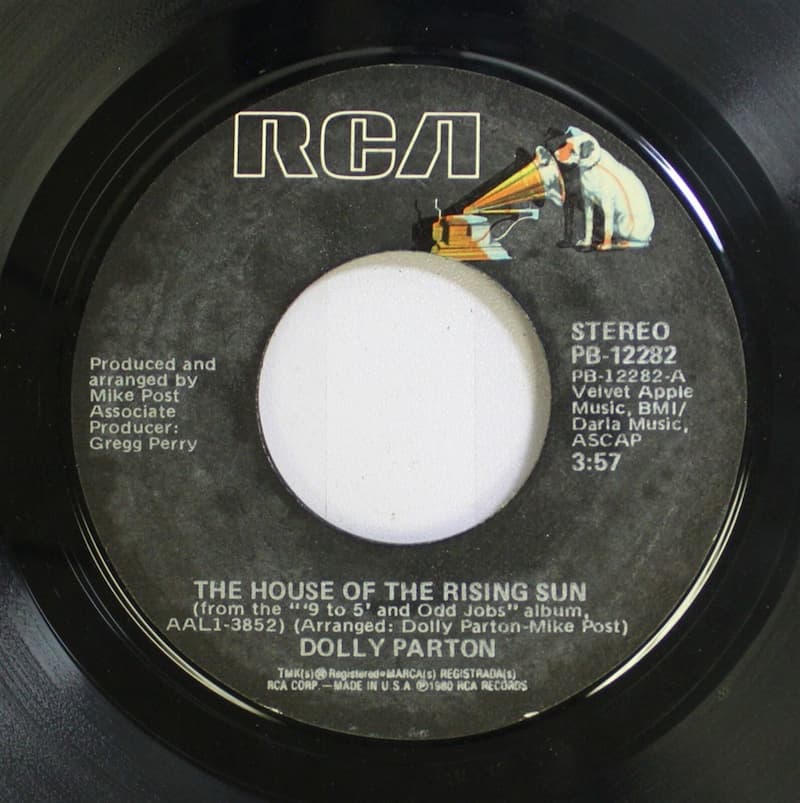
Released on August 3, 1981, as a double A-sided single with “Working Girl,” “The House of the Rising Sun” arrived as the third single from Dolly Parton’s album 9 to 5 and Odd Jobs on RCA Records. The album itself had come out on November 17, 1980, and was produced by Mike Post with Parton serving as executive producer. The four-minute-two-second track was recorded in November 1980 during sessions that blended country, pop, and folk influences, fitting into a project that mixed originals with well-chosen covers from earlier decades. It featured a straightforward arrangement of acoustic guitar, piano, and subtle orchestration that let Parton’s clear soprano carry the storytelling weight.
By late 1981 Parton was riding high from the massive success of the 9 to 5 film and its title track. The album 9 to 5 and Odd Jobs continued her crossover momentum while allowing her to explore traditional material alongside more contemporary sounds. Post’s production kept the focus on vocal performance, with the familiar folk melody updated just enough to sit comfortably beside the project’s working-woman themes. The single gave radio programmers a choice between the country-leaning “House of the Rising Sun” and the pop-oriented B-side, a strategy that had worked well for Parton in previous releases.
The song is a traditional folk number, sometimes known as “Rising Sun Blues,” with roots stretching back to the early 20th century. It tells the story of a life gone wrong in New Orleans, often interpreted as the tale of a woman working in a brothel. Parton adapted a few lines herself, sharpening the narrative to make the fallen-woman theme more direct and personal. This approach echoed earlier country versions, including Frijid Pink’s 1970 rock hit and earlier interpretations by artists such as Woody Guthrie and Joan Baez, but Parton’s delivery brought a warm, matter-of-fact sincerity that suited her mountain-rooted style.
The single reached number 14 on the Billboard Hot Country Songs chart and crossed over to number 77 on the Billboard Hot 100. It also peaked at number 30 on the Adult Contemporary survey and number 20 on the Canadian RPM Country Tracks chart. While it did not match the chart-topping success of the album’s earlier singles such as “9 to 5” or “But You Know I Love You,” its steady performance added depth to the project’s commercial run and introduced the traditional folk standard to a new generation of country and pop listeners.
In the lyrics the narrator describes a notorious house in New Orleans’ Vieux Carré known as the Rising Sun, where lives are ruined by gambling, drinking, and lost love. Parton sings of a mother who warned her daughter against the place and of the personal regret that follows poor choices. The verses unfold with a sense of inevitability rather than judgment, building to the repeated image of the house that has claimed many souls. Delivered without melodrama, the song relies on Parton’s emotive phrasing and the sparse instrumentation to convey quiet resignation and hard-won wisdom.
Parton performed the track live on her 1987–88 television series Dolly in an episode taped in New Orleans, bringing the song full circle to its geographic roots. The appearance helped keep the recording in circulation long after its initial chart run. Over time the version has appeared on various compilations and remains a notable example of how Parton could take a well-known standard and infuse it with her distinctive vocal warmth and narrative clarity.
The release stood as another illustration of Parton’s versatility during her peak crossover years. It bridged her mountain heritage and love of traditional folk material with the broader audience she had built through film and pop success. Decades later “The House of the Rising Sun” continues to highlight her skill at reinterpreting classics while staying true to the honest, straightforward storytelling that has defined much of her catalog since the early 1970s.
Video
Lyric
There is a house down in New Orleans
Down in the Vieux Carr’e
A house they call the rising sun
Where love and money are made
My father he was a gambler
Mother died when I was young
And I’ve worked since then
To please the men
At the house of the rising sun
There is a house
Down in New Orleans
They call the rising sun
It’s been the ruin of many a good girl
And oh God, you know I’m one
So mothers you go telling all your daughters
Not to do what I’ve done
To live a life of sin, shame and strife
In the house of the rising sun
There is a house in New Orleans
They call the rising sun
It’s been the ruin of many a good girl
And oh God, you know I’m one
Oh God, you know I’m one