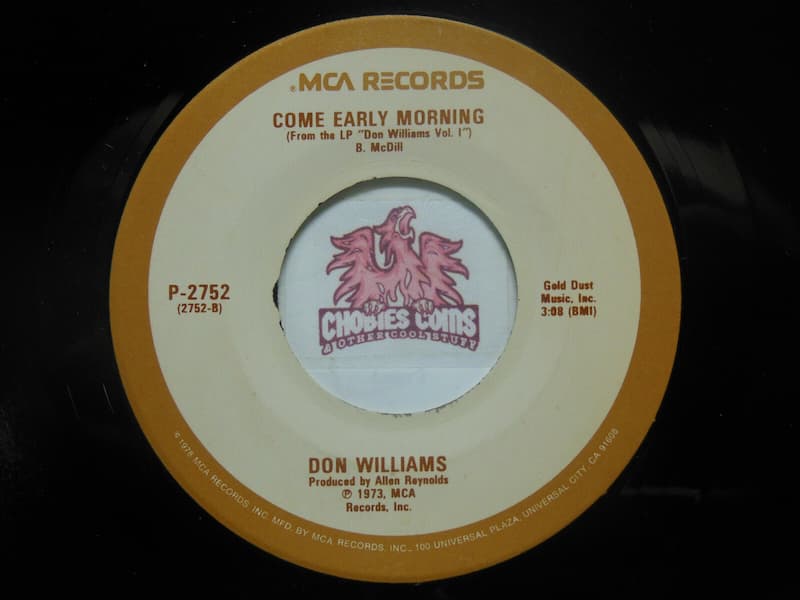
About The Song
“Come Early Morning” is one of Don Williams’s early signature records, and it helped define the calm, conversational tone that later made him one of country radio’s most reliable stars. The song was written by Bob McDill and released by Don Williams in 1973 on JMI Records, with the track appearing on his 1973 album Don Williams Volume One. That timing matters because this was essentially the start of his solo identity after the Pozo-Seco Singers period: a singer leaning into understatement, clear diction, and songs that sounded like real conversation rather than stage drama.
The title phrase sets the whole emotional logic. “Come early morning” signals a relationship that’s not fully secure—someone leaves, someone returns, and the singer is trying to stabilize the pattern with a simple request. McDill’s writing is efficient in the way it often is: plain language that implies a full situation without long explanation. The lyric doesn’t depend on complicated metaphor. It depends on timing, routine, and the quiet tension of wanting closeness without turning the conversation into a fight. That kind of emotional economy is a major reason the song translated so well to radio.
Don Williams’s delivery is the key to why the song lands without sounding needy or theatrical. He sings it like a practical statement, not a dramatic plea. That restraint became his commercial advantage. Where other singers might push the hurt or heighten the conflict, Williams keeps the tone steady, letting the words do the work. The arrangement supports that steadiness with a clean, uncluttered frame that keeps the vocal at the center. It sounds intimate and radio-ready at the same time, which is exactly the balance that would define his career.
In career context, “Come Early Morning” also established an important pattern: Don Williams often excelled with songs written by top Nashville craftsmen, especially Bob McDill, because their writing matched his voice’s natural credibility. Williams did not need elaborate storytelling to connect. He needed a sentence that sounded like real life and a melody that allowed him to deliver it plainly. This record shows that formula clearly at the very beginning of his solo run, which is why it remains a reference point when people describe the “Don Williams sound.”
On Billboard, the song is documented as a significant hit on the country singles chart in 1973 (commonly listed as a Top 20 country single), helping build the momentum that would soon turn into a long string of major hits. If you want to publish the exact peak and chart week, the best practice is to confirm the specific entry in Billboard’s country archive for 1973, but the broader historical point is stable: this was an early solo-era success that helped establish him as a mainstream country act.
If you want a deeper closing frame without adding extra sentiment, treat “Come Early Morning” as a blueprint for Don Williams’s entire approach. McDill supplied a hook that sounds like ordinary speech, and Williams delivered it with restraint so the situation feels believable rather than staged. That combination—simple language, adult emotional tension, clean production, and calm vocal authority—became one of the most durable formulas in modern country, and it started here in the earliest phase of his solo career.