About The Song
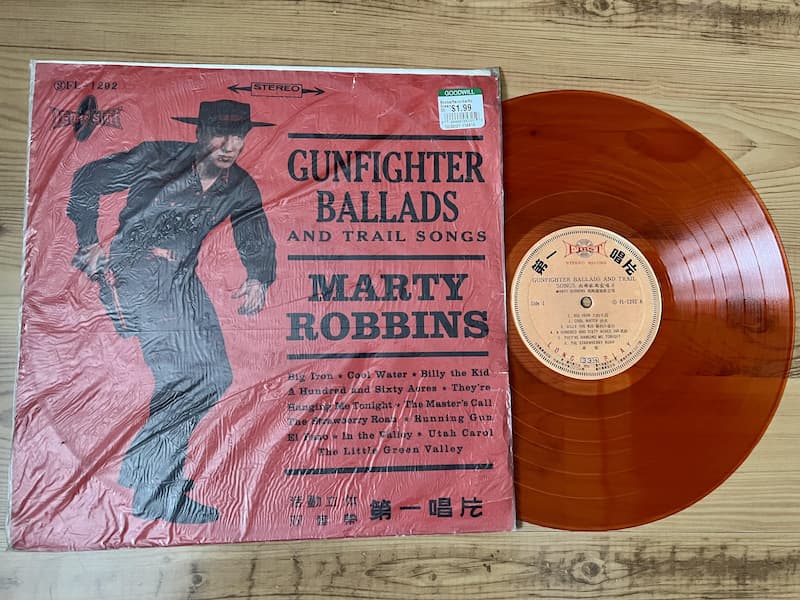
“Billy the Kid” is a western narrative song written and recorded by Marty Robbins and released in 1960 on his album More Gunfighter Ballads and Trail Songs. Issued by Columbia Records, the album served as a direct continuation of the highly successful Gunfighter Ballads and Trail Songs and further established Robbins as the leading storyteller of western-themed country music. The song was included as an album track rather than being released as a standalone single.
During this period, Marty Robbins was deeply committed to exploring frontier legends and outlaw figures through concise musical narratives. His approach favored clarity, moral perspective, and historical atmosphere over romantic exaggeration. “Billy the Kid” fits comfortably within this framework, drawing on the well-known legend of the outlaw William H. Bonney and presenting his life and death as a cautionary tale rather than a celebration.
Lyrically, the song recounts Billy the Kid’s reputation as a feared gunman and traces the circumstances leading to his eventual killing. Robbins frames the story in a straightforward, report-like manner, outlining the outlaw’s violent life and its inevitable conclusion. The lyric avoids embellishment and myth-making, instead emphasizing the consequences of a life lived outside the law. This restrained narrative style reinforces the song’s moral clarity.
Musically, “Billy the Kid” is arranged in the spare western ballad style that defines Robbins’s gunfighter recordings. Acoustic guitar forms the core of the accompaniment, supported by light rhythm and minimal instrumental accents. The tempo is steady and deliberate, allowing the story to unfold clearly and giving the listener space to absorb the narrative details.
Marty Robbins’s vocal delivery is calm and authoritative. He sings with a storyteller’s composure, avoiding dramatic shifts in tone. This measured performance keeps the focus on the narrative rather than on emotional display, a technique Robbins consistently used to give his western songs a documentary-like quality.
Although “Billy the Kid” did not chart independently as a single, it benefited from the popularity of More Gunfighter Ballads and Trail Songs, which performed well commercially and remained influential for decades. The album’s cohesive concept ensured that tracks like this one reached a wide audience through LP sales and later reissues.
In retrospect, “Billy the Kid” is regarded as a representative example of Marty Robbins’s disciplined western storytelling. It demonstrates his ability to condense history and legend into a brief, self-contained song while maintaining narrative clarity and moral perspective. The track remains a respected deep cut in Robbins’s catalog and continues to appear on compilations dedicated to his influential gunfighter ballads.
Video
Lyric
I’ll sing you a true song of Billy the Kid
I’ll sing of some desperate deeds that he did
‘Way out in New Mexico long long ago
When a man’s only chance was his own forty-four
When Billy the Kid was a very young lad
In old Silver City he went to the bad
‘Way out in the West with a gun in his hand
At the age of twelve years he did kill his first man
There’s Mexican maidens play guitars and sing
Songs about Billy, their boy bandit king
‘Ere his young manhood has reached his sad end
With a notch an his pistol for twenty one men!
Was on a sad night when poor Billy died
He said to his friend, “I’m not satisfied
There’s twenty one men I have put bullets through
Sheriff Pat Garrett must make twenty two!”
I’ll sing you how Billy the Kid met his fate
The bright moon was shinin’, the hour was late
Shot down by Pat Garrett who once was his friend
The young outlaw’s life is now come to an end
There’s many a man with a face fine and fair
Who start out in life with a chance to be square
Just like poor Billy they wander astray
They’ll lose their lives in the very same way!