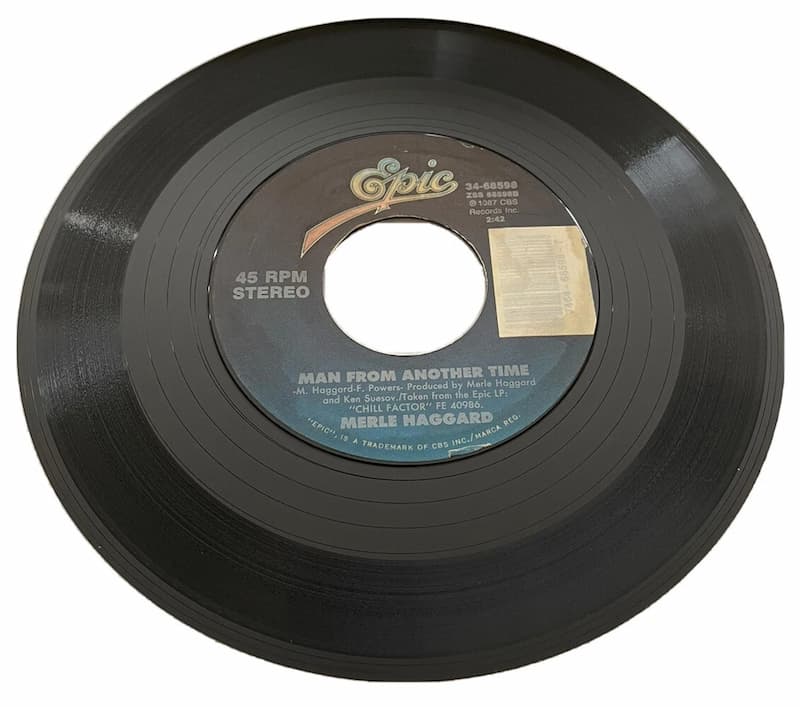
About The Song
In the later stages of his career, Merle Haggard increasingly turned toward songs that reflected on time, change, and the feeling of being slightly out of step with the modern world. “A Man from Another Time,” from his 1994 album *1994*, is one of those quietly powerful reflections. Written by Haggard himself, the track captures the perspective of someone who has lived long enough to see the ground shift beneath his feet and has decided, without apology, to keep standing where he’s always stood.
The lyrics paint a portrait of a man who still believes in the old codes — hard work, straight talk, and a certain stubborn independence — even as the culture around him moves toward quicker, flashier versions of success. There’s no ranting against progress, just a clear-eyed acknowledgment that some values don’t translate easily into the new century. Haggard delivers the words with the calm authority of someone who has earned the right to feel this way. His voice carries both the weight of experience and a touch of wry acceptance.
By 1994 Haggard had already spent more than three decades as one of country music’s most consistent and respected voices. He had survived prison, multiple marriages, commercial peaks, and the constant pressure to stay relevant while younger artists reshaped the genre. Albums like *Serving 190 Proof* and *The Way I Am* had shown him willing to explore middle age and personal reflection. *1994* continued that thread, but with an added layer of historical perspective. “A Man from Another Time” feels like the natural extension of a career spent chronicling working-class life — only now the working man is looking back and wondering where his world went.
What makes the song especially resonant is how little it tries to romanticize the past. Haggard doesn’t claim everything used to be better. He simply notes that certain ways of moving through life — certain definitions of manhood, loyalty, and self-reliance — no longer fit comfortably in the present. The song becomes both personal and generational, speaking for anyone who has ever felt their core values slowly turning into quaint relics.
The track also reflects Haggard’s broader role in country music as a bridge between eras. He had helped define the Bakersfield sound in the 1960s and 1970s, then watched as the genre embraced pop production, music videos, and a younger audience. Rather than chase trends, he kept writing from the same honest place. “A Man from Another Time” stands as a quiet declaration that some artists — and some ways of being — are meant to endure by staying true to their original shape, even when the spotlight moves elsewhere.
Decades later the song remains one of the most understated yet profound entries in Haggard’s vast catalog. It doesn’t demand attention the way some of his anthems do, but it rewards repeated listening with its steady wisdom and its refusal to apologize for who he was. In a career built on telling the truth about ordinary lives, this late-career reflection stands as a powerful reminder that sometimes the most radical act is simply refusing to become someone you’re not — even when the world keeps asking you to hurry up and change.
Video
Lyric
I lost a woman
I believed to be perfect for me
And you could replace her
But you’re so much younger than me
Our lives are so different
Our music is not the same kind
It’s like we’re just out of focus
With no way to bring us in line
I’m like a man from another time
I’m old fashion music, I’m old fashion wine
A pilgrim like Jesus, but in no way divine
I’m like a man from another time
I may be a reincarnated
From a soldier who died in some war
With our thirty year difference
I’m like born in some lifetime before
I’m old fashion music, I’m old fashion wine
I’m like a man from another time
Maybe reincarnated
From a soldier who died in some war
With our thirty year difference
I’m like born in some lifetime before
I’m old fashion music, I’m old fashion wine
I’m like a man from another time
I’m like a man from another time