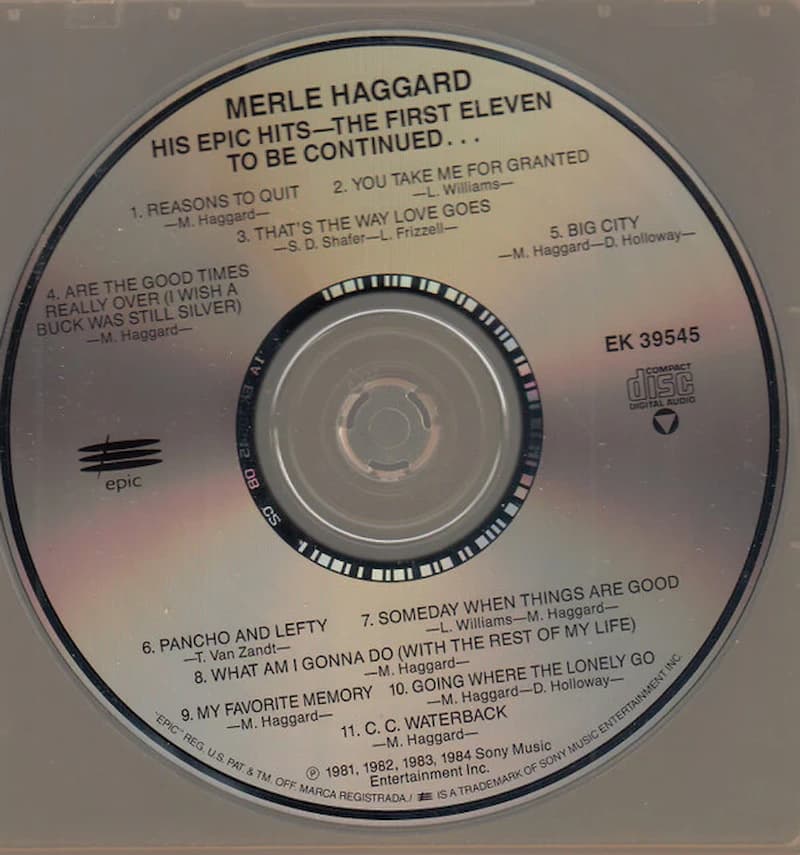
About The Song
“Big City” is one of Merle Haggard’s most enduring late-career statements, released in 1981 when he had already spent more than a decade defining what hard country could sound like on mainstream radio. Haggard wrote the song and issued it on Epic Records, and it served as the title track for the 1981 album Big City. The timing matters: this was an era when country production was shifting, but Haggard could still win big by leaning into plain language and a worldview that felt rooted in working-class realism rather than trend-chasing.
The premise is instantly clear and built around one of Haggard’s most effective techniques: a repeated, quotable demand that sounds like everyday speech. The narrator is tired of the “bright lights” pressure and wants out—back to a smaller place, away from expectations, back to a life that feels manageable. “Big city” becomes more than geography; it’s a symbol of stress, status, and constant motion. Haggard doesn’t need a complicated plot to make the argument. He sets the emotional problem in the title and spends the song reinforcing it with direct, memorable lines.
A key side story is how “Big City” connects to the long tradition of rural-versus-urban tension in country music, but in Haggard’s hands it doesn’t sound like an abstract cultural slogan. It sounds like someone who has lived long enough to know what he can’t tolerate anymore. That’s one reason the record still plays well decades later: the complaint is specific, the language is simple, and the persona feels credible. It also helps explain why listeners often treat the song as autobiographical even though it functions primarily as a character statement—Haggard’s voice made this kind of worldview feel lived-in.
Musically, the record is built to hit quickly. The arrangement supports the lyric’s momentum rather than competing with it, and Haggard’s delivery stays controlled and conversational. That restraint keeps the song from becoming melodrama or novelty. The performance feels like a decision already made: he isn’t negotiating with the “big city,” he’s leaving it. That tone is central to the song’s power, because it turns what could have been a complaint into a firm declaration of personal limits.
On Billboard, “Big City” was a major country success in 1982 and is commonly documented as reaching No. 1 on the country singles chart. The song’s chart life matters because it proves how durable Haggard’s writing method remained into the 1980s: he could still take a simple phrase and turn it into a national hit without smoothing the edges or leaning on pop crossover tricks. At a time when the genre was broadening stylistically, Haggard showed that a direct, hard-country statement could still dominate.
If you want a deeper closing frame, treat “Big City” as a late-stage Merle Haggard blueprint: one strong title that carries the whole argument, a narrator speaking in plain language, and a performance that refuses to overplay the emotion. The song endures because it feels practical rather than poetic—someone drawing a line and choosing a life that fits. That is the core of Haggard’s appeal across eras: he made complicated social and personal pressures sound simple enough to sing, and believable enough that listeners recognized themselves in the decision.