About The Song
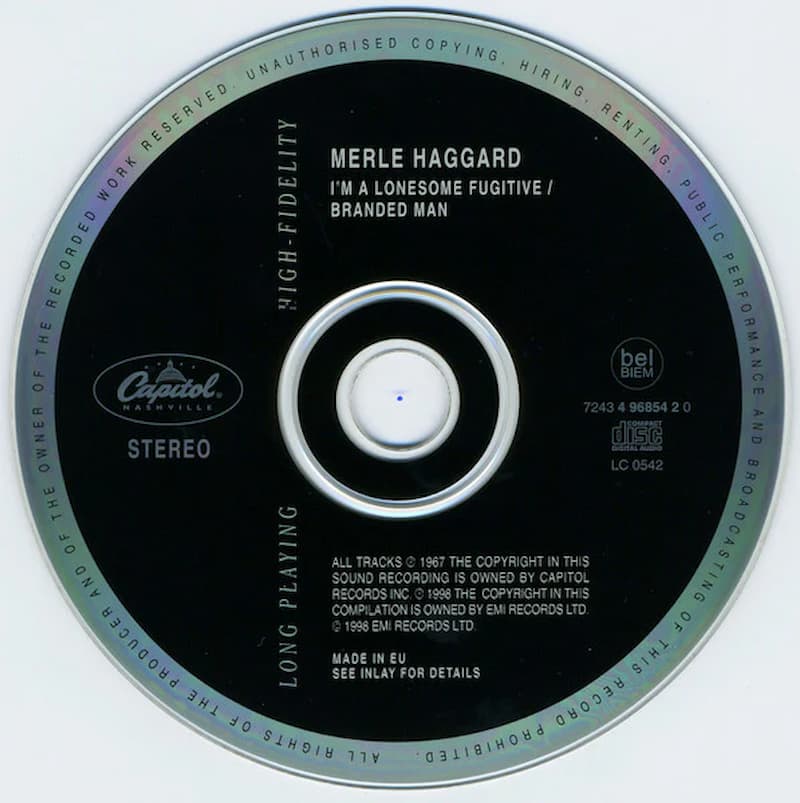
“I’m a Lonesome Fugitive” is one of the records that turned Merle Haggard from a rising regional talent into a national country star, and it also introduced one of the most durable personas in 1960s hard country. The song was written by Casey Anderson and became Haggard’s breakthrough single in 1966 on Capitol Records. It also provided the title for the 1967 album I’m a Lonesome Fugitive, which helped cement the story-world Haggard would return to repeatedly: working-class settings, consequences, and a narrator who speaks plainly about what he’s done and what he can’t escape.
The narrative is compact and immediately legible. The singer is on the run, living under constant tension, and unable to settle into any “normal” life because the past is always near. What made the song hit so hard is that it doesn’t glamorize crime or ask for pity. It treats the fugitive’s life as a form of permanent anxiety and isolation. That tone aligned perfectly with Haggard’s emerging image in the mid-1960s, when country audiences were responding strongly to records that sounded like real life rather than studio fantasy.
A key side story is how closely the song’s theme overlapped with public knowledge of Haggard’s own past. By the time he recorded it, his history—including incarceration at San Quentin—was part of his background narrative, and the “fugitive” perspective carried extra credibility because listeners believed he understood that world. This does not mean the song is literal autobiography; it is still a composition by Casey Anderson. But Haggard’s performance made the character feel authentic. This is a classic country dynamic: the writer creates the structure, and the singer supplies the lived-in authority that makes the lyric land.
Musically and vocally, the record fits the harder edge often associated with the Bakersfield-linked alternative to smoother Nashville country-pop. The arrangement is tight and direct, designed for radio and jukebox impact, while Haggard’s delivery stays controlled—more resigned than dramatic. That restraint is crucial. It keeps the song from becoming melodrama and instead makes it sound like a report from someone who has already accepted the consequences. This is one reason the record aged well: it feels disciplined rather than period-stylized.
On Billboard, “I’m a Lonesome Fugitive” is documented as a major country hit and is widely cited as Haggard’s first No. 1 on the country chart (mid-1966). For publication-quality precision, you can confirm the exact chart name and week in Billboard’s archive, but the core historical point is stable: this single was the breakthrough that established him as a top-tier act. The album that followed carried the momentum forward and helped define the adult realism that would become one of his main artistic signatures.
For a deeper closing frame, treat the song as a blueprint for Haggard’s early career: a strong outside writer (Casey Anderson), a narrator built on consequence rather than romance, and a performance style that refuses to overstate the drama. “I’m a Lonesome Fugitive” mattered because it made realism commercially viable at the top of the country market. It showed that a hit could be tense, unsentimental, and morally complicated—so long as the voice delivering it sounded believable.