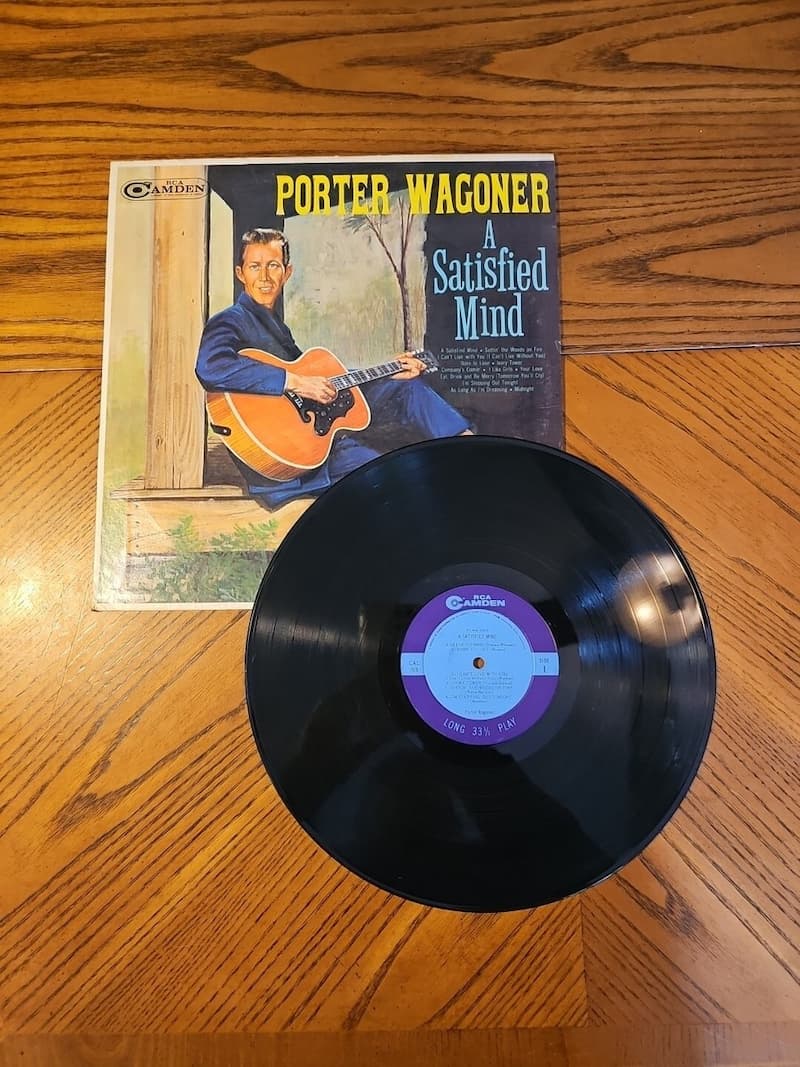
About The Song
“A Satisfied Mind” was written by Joe “Red” Hayes and Jack Rhodes. Porter Wagoner recorded the song on September 11, 1954, and RCA Victor released it as a single in May 1955. It became the title track of his debut album *Satisfied Mind*, issued in February 1957. The recording marked Wagoner’s first number-one country hit and helped establish him as a rising star on the Grand Ole Opry and national charts.
The single reached number one on the Billboard country charts in 1955. Two other versions of the song also charted that year: one by Red Foley and Betty Foley peaked at number three, while Jean Shepard’s recording reached number four. Wagoner’s rendition proved the most successful and remains the best-known of the early recordings. The song later found new audiences through covers by artists including Joan Baez, the Byrds, Bob Dylan, and Johnny Cash.
The lyric reflects on the difference between material wealth and genuine contentment. The singer observes that few rich people truly possess a satisfied mind, recounts losing fortune and fame, and concludes that he is richer for having peace of mind. Money cannot restore youth, replace a lost friend, or revive a cold love. When life ends, the only lasting possession is that sense of satisfaction. The straightforward message and traditional country arrangement gave the song broad appeal.
Hayes explained that the words drew heavily from things his mother had said over the years. The title itself came from a conversation with his father-in-law, who asked who the richest man in the world was and then answered that it was the man with a satisfied mind. Hayes later recalled hearing a church congregation sing the song after an Opry performance, an experience that moved him deeply.
Wagoner’s clear, earnest delivery and the song’s moral clarity suited the mid-1950s country audience. It became a staple of his early repertoire and helped define the thoughtful, traditional side of his work. Over the decades the composition has remained in circulation, appearing on folk, country, and gospel recordings alike, a testament to the enduring strength of its central idea.
Within Porter Wagoner’s long career, “A Satisfied Mind” stands as his first major hit and one of his most lasting recordings. Its chart success in 1955, its simple philosophical message, and its continued presence in the catalogs of later artists have secured its place among the classic country songs of the 1950s.
Video
Lyric
How many times have you heard someone say
“If I had his money, I could do things my way?”
But little they know that it’s so hard to find
One rich man in ten with a satisfied mind
Once I was wading in fortune and fame
Everything that I dreamed for to get a start in life’s game
But suddenly it happened, I lost every dime
But I’m richer by far with a satisfied mind
Money can’t buy back your youth when you’re old
Or a friend when you’re lonely, or a love that’s grown cold
The wealthiest person is a pauper at times
Compared to the man with a satisfied mind
When life has ended, my time has run out
My friends and my loved ones, I’ll leave, there’s no doubt
But there’s one thing for certain, when it comes my time
I’ll leave this old world with a satisfied mind