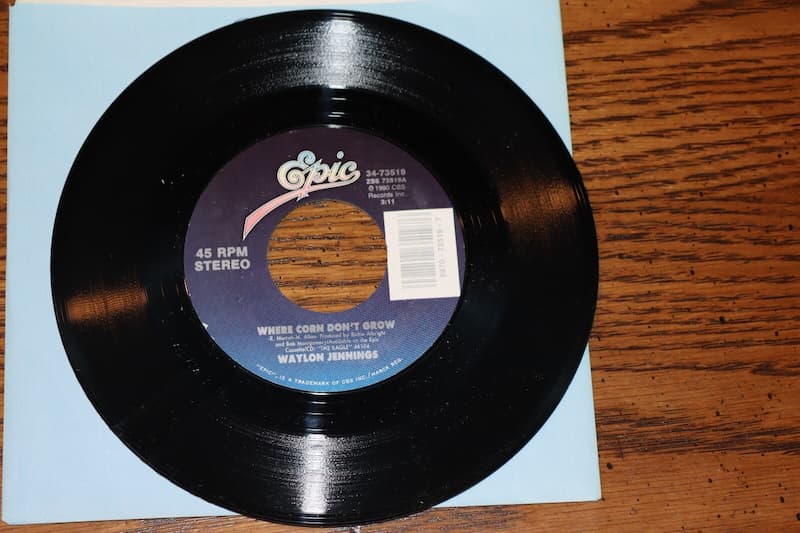
About The Song
“Where Corn Don’t Grow” is a country song written by Roger Murrah and Mark Alan Springer that entered the repertoire of several major country artists. Waylon Jennings recorded an early notable version and included it on his later-period album releases, presenting the song in his trademark, lived-in vocal style. The composition found a wider commercial audience when Travis Tritt recorded it in the 1990s, turning the tune into a mainstream country radio single and introducing the story-driven lyric to a new generation of listeners.
The song’s narrative follows a young man who leaves home, confident he can make his way in the world, only to encounter hardship and regret. The refrain—invoking a place “where corn don’t grow”—works as both literal image and metaphor for barren prospects and the consequences of leaving familiar ground. That plainspoken storyline, with its moral turn and homeward-looking resolution, fits squarely in the tradition of country songs that trade on small, concrete details to communicate larger life lessons.
Musically, Jennings’s reading tends to favor a lean, band-centered arrangement that keeps the vocal up front: acoustic and electric guitars, steady rhythm and modest steel or keyboard color. His performance emphasizes authority and weathered perspective, making the narrator’s hard-earned recognition feel credible. When later artists interpreted the song—most prominently Travis Tritt—the arrangement shifted toward contemporary country production of the era, with punchier electric-guitar figures, fuller rhythmic drive and a slightly more anthemic chorus designed for radio play.
Lyrically the song balances anecdote and aphorism. Verses supply the small actions and mistakes that accumulate into the narrator’s regretful insight, while the chorus crystallizes the moral truth into a memorable hook. The language is conversational and economical, avoiding ornate metaphor in favor of immediate images—a mother’s warning, a train leaving town, empty pockets—that make the character’s reversal easy to hear on first listen.
Commercially, the song sustained life across multiple recordings. Waylon Jennings’s version helped place the composition within the catalog of established country interpreters, and the later 1990s single version achieved meaningful chart presence for Travis Tritt, becoming one of his recognizable hits of the decade. The tune’s appeal lies in its combination of narrative clarity, singable chorus and a theme—returning to what matters—that resonates broadly with country audiences.
Today “Where Corn Don’t Grow” is heard both as a period single from the 1990s country mainstream and as part of the longer lineage of story songs in American country music. It remains a regular inclusion on retrospectives and playlists that collect narrative-driven country work, and listeners encounter it either through Jennings’s more weathered interpretation or through the polished, radio-ready version that brought the song extensive exposure during the 1990s.
Video
Lyric
As we sat on the front porch
Of that ole gray house where I was born and raised
And stared out at the dusty fields
Where daddy’s always worked hard every day
I think it kinda hurt him when I said daddy there’s a lot that I don’t know
But don’t you ever dream about a life where corn don’t grow
He just sat there silent staring in his favorite coffee cup
I saw a storm of mixed emotion in his eyes when he looked up
He said son I know at your age it feels like this old world is turning slow
And you think you’ll find the answer to it all where corn don’t grow
But hard times are real there’s dusty fields no matter where you go
You may change your mind cause the weeds are high where corn don’t grow
I remember feeling guilty when daddy turned and walked back in the house
I was only seventeen back then but it seems like I knew more than I do now
I can’t say he didn’t tell me this city life’s a hard row to hoe
It’s funny how a dream can turn around where corn don’t grow
But hard times are real…
You may change your mind cause the weeds are high where corn don’t grow