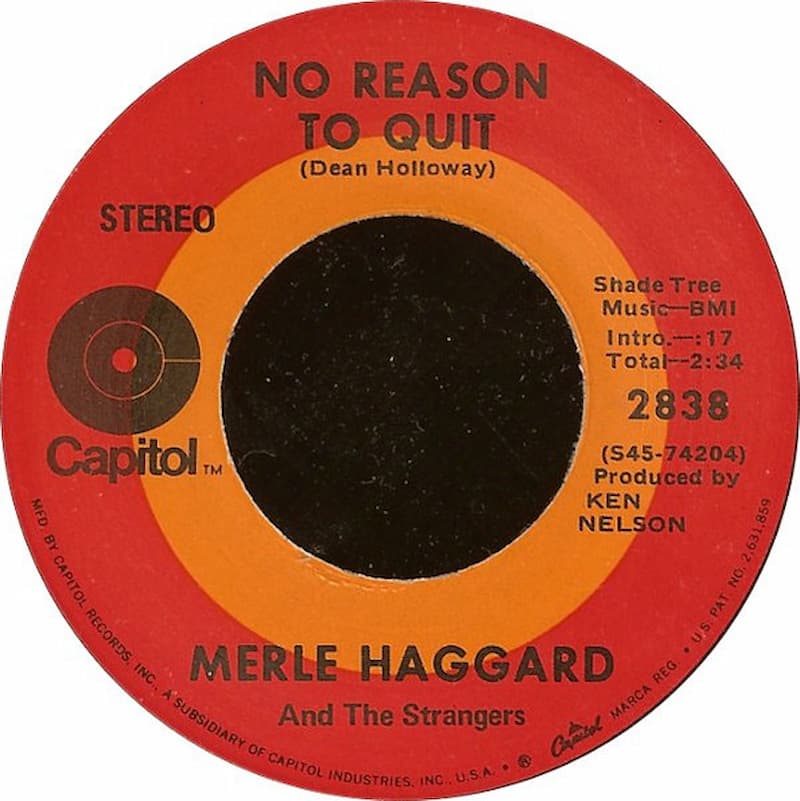
About The Song
In the early 1980s Merle Haggard recorded “No Reason to Quit,” a stark, confessional track that found him examining the grip of addiction with unflinching honesty. The song appears on collaborative projects from that period, including work connected to his duo album with Willie Nelson, *Pancho & Lefty*. While it was never one of his biggest radio hits, the track has endured among fans for its raw portrayal of someone caught in the cycle of substance abuse who still senses a flicker of hope for change.
The lyrics describe a man who has been pushed to the edges of his social circle, no longer welcome in the same rooms he once filled. He admits he could sober up tomorrow if he truly wanted to, yet he feels no compelling reason to do so. The shame is present, but so is a quiet self-awareness that he is “man enough to change.” Haggard delivers the words with the steady, lived-in voice of someone who has stood in that exact place, making the song feel less like a performance and more like a late-night conversation with himself.
By this stage of his career Haggard had already spent decades turning his personal struggles into song. He had written openly about prison, failed relationships, and the hard living that defined much of his early life. “No Reason to Quit” fit into that long tradition of honest self-examination. It didn’t glamorize the struggle or offer easy redemption. Instead, it simply held up a mirror to the moment when a person realizes the cost of their habits but hasn’t yet found the motivation to stop.
The track also reflects the broader cultural moment of the early 1980s, when country music was beginning to make more room for mature, adult themes. While upbeat hits still dominated the charts, artists like Haggard and Nelson were increasingly willing to explore the quieter, more complicated corners of life — including addiction and the slow, unglamorous work of trying to break free from it. Their collaborations during this period often carried this weight, blending two voices that had both lived through plenty.
What keeps the song resonating decades later is its refusal to judge or preach. Haggard simply describes the reality of being trapped by something that no longer serves you, while still holding onto the knowledge that change remains possible. That balance between resignation and quiet resolve has made “No Reason to Quit” a touchstone for listeners who have faced similar battles, whether with alcohol, other substances, or any habit that slowly erodes the life they once wanted.
In the larger story of Haggard’s career, the song stands as another example of his willingness to write from the most difficult parts of his own experience. He never pretended to have all the answers, but he kept showing up with the courage to name the problem out loud. That honesty is what has kept his music connecting with new generations long after the charts moved on.
Video
Lyric
There’s a circle of people where I’m no longer welcome
I’m ashamed to say that I’m no longer fit
I could sober up tomorrow and face my friends again
But I’ve got no reason to quit
No I’ve got no reason for living right and there’s no other way to forget
I could sober up tomorrow and face my friends again
But I’ve got no reason to quit
I’ve got no reason for living right and there’s no other way to forget
I know down deep inside me I’m man enough to change
But I’ve got no reason to quit